Naveen K
Posts by Naveen K
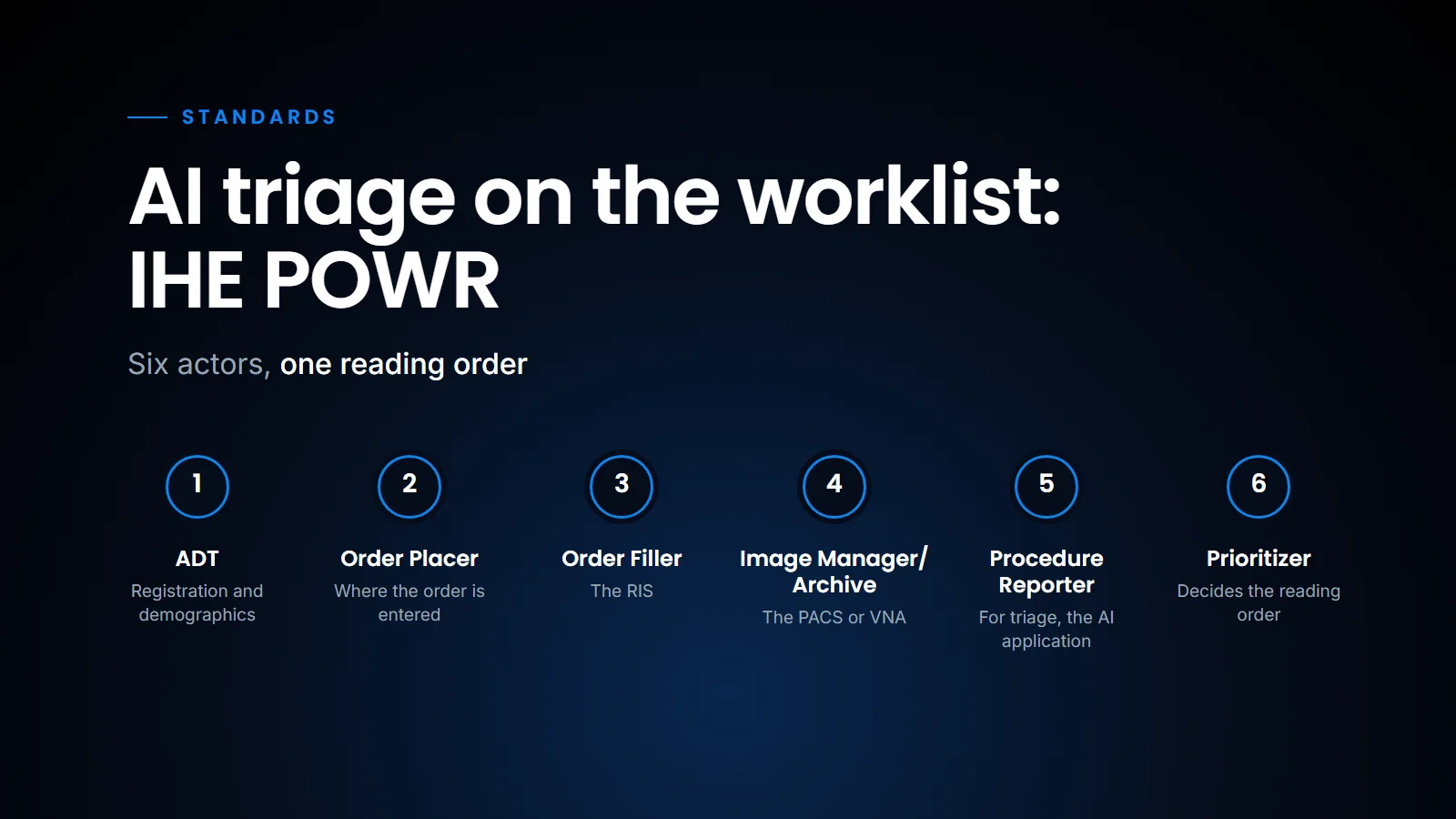
AI triage on the worklist: IHE POWR
The IHE POWR profile lets AI triage results reorder a radiology worklist over standard HL7 v2. The Prioritizer, the OMI/OBX message, and why it matters.
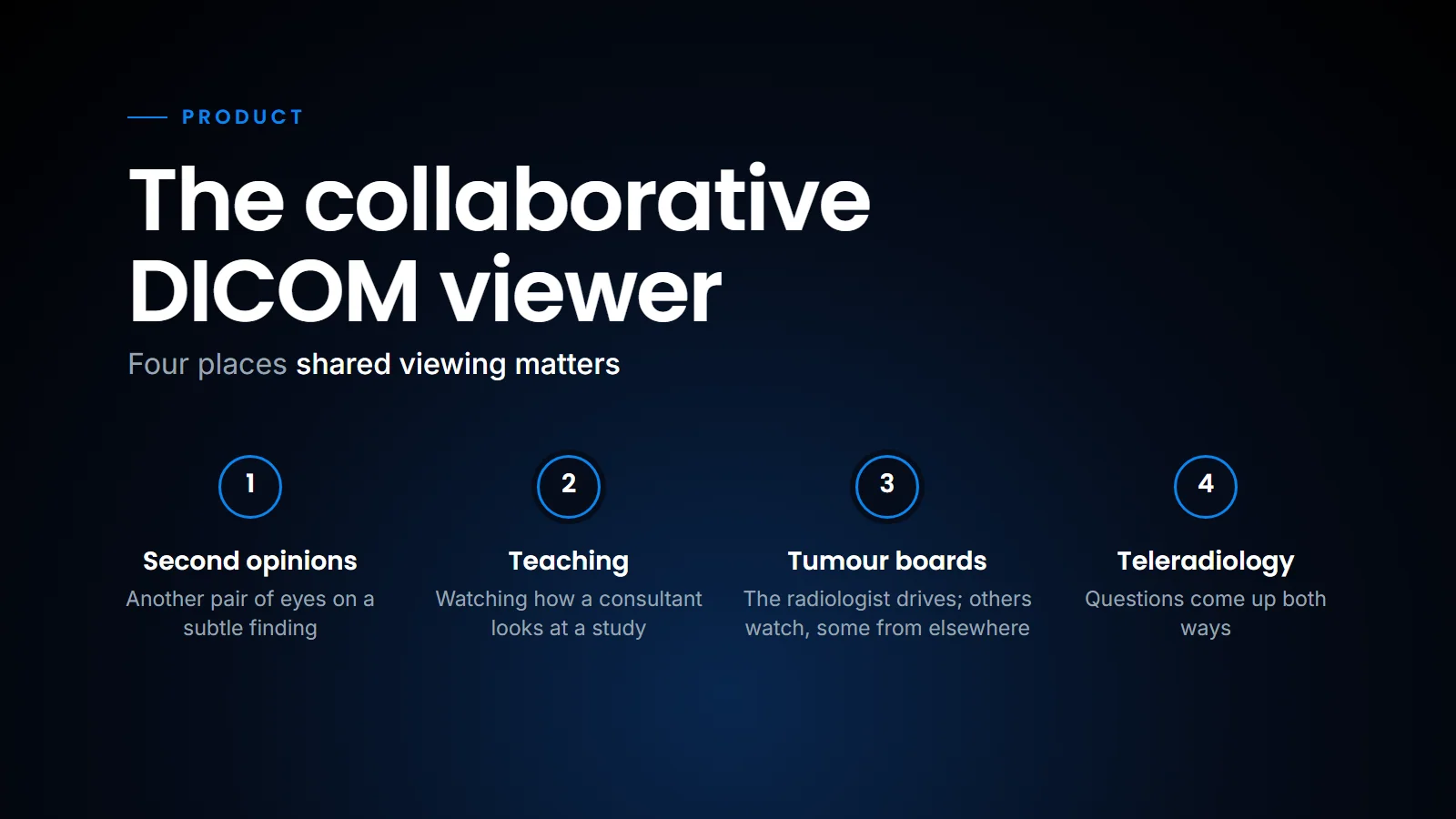
The collaborative DICOM viewer
Why radiologists read images together, and how a collaborative browser DICOM viewer helps with second opinions, teaching, tumour boards and teleradiology.
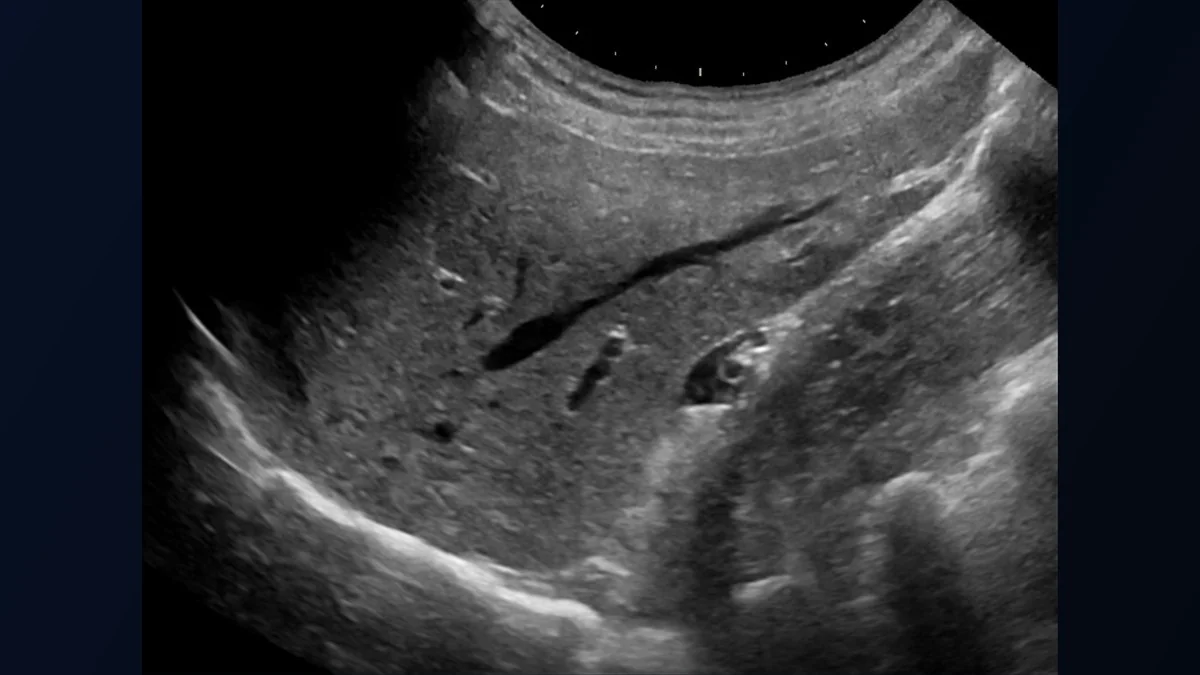
SonoFlow: ultrasound reports from the frames you already saved
Ultrasound reporting software that reads measurements off saved frames, fills OB or general worksheets and drafts a report the radiologist reviews and signs.
How we approached coronary calcium scoring
How SOMATIQ scores coronary artery calcium in the browser: the Agatston method, scoring per artery, and why low-dose chest CT is part of the plan.
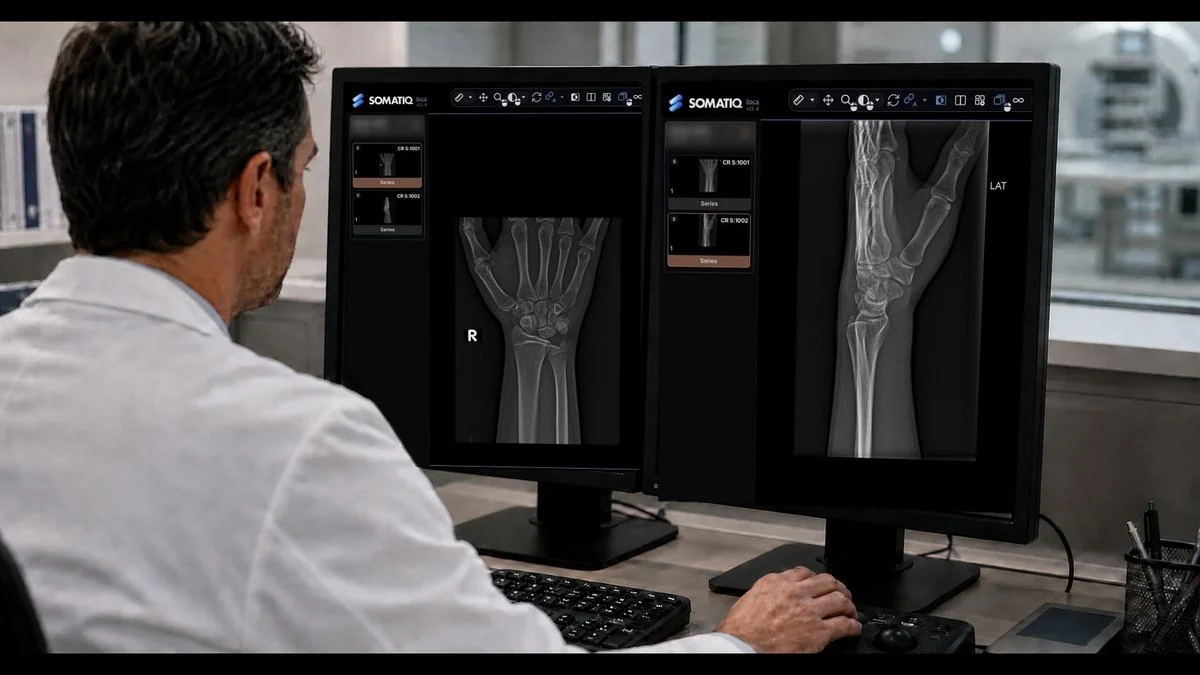
Gemini 3.5 Flash on wrist X-rays
We ran Gemini 3.5 Flash on 71 adult wrist X-rays twice, with a naive prompt and a structured reading protocol. It found more fractures and invented more.
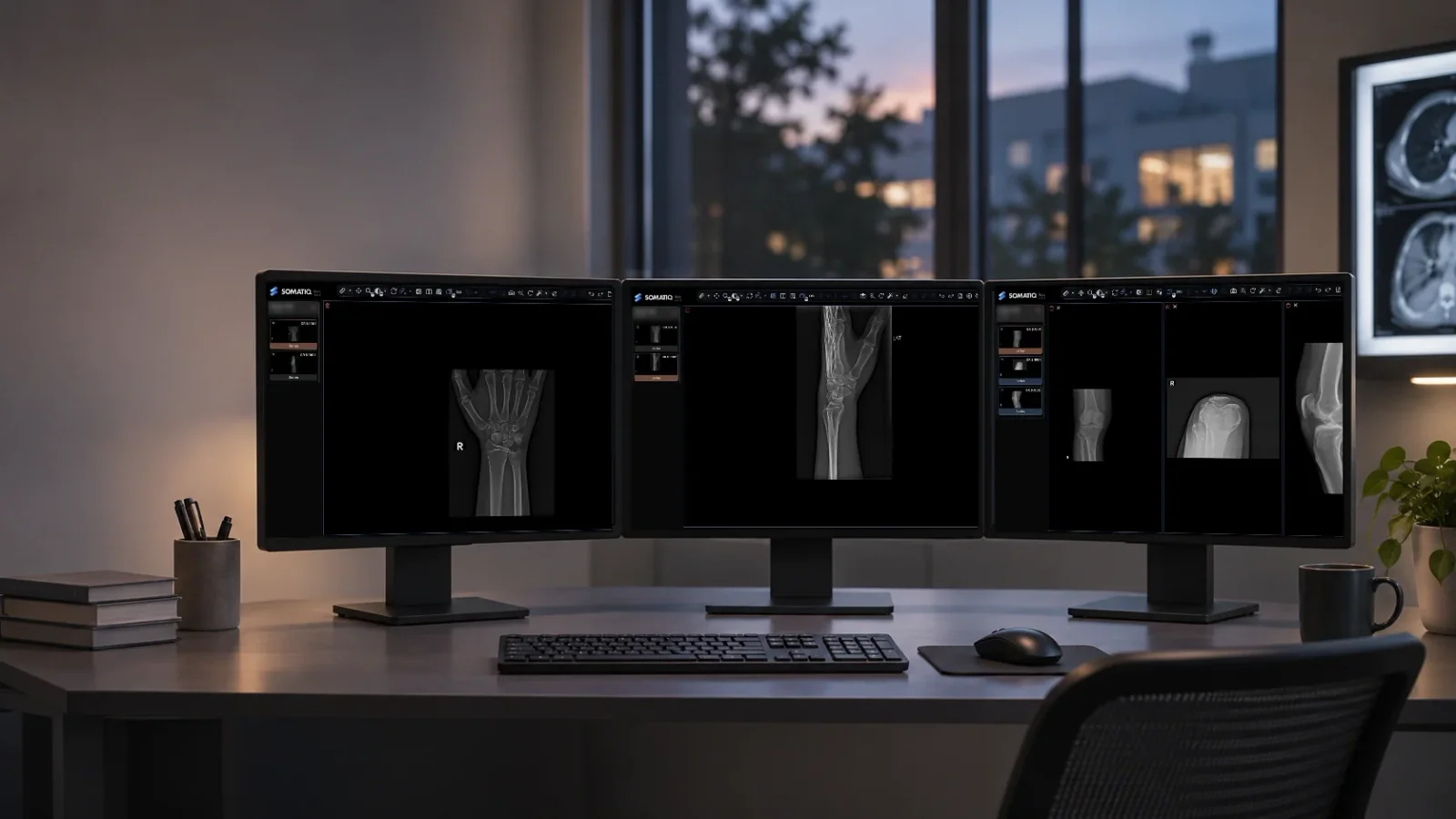
Frontier, open-weight or medical models?
Frontier closed models, open-weight models or healthcare models like MedGemma: how SOMATIQ and Hypervelocity are testing which AI can actually read an X-ray.
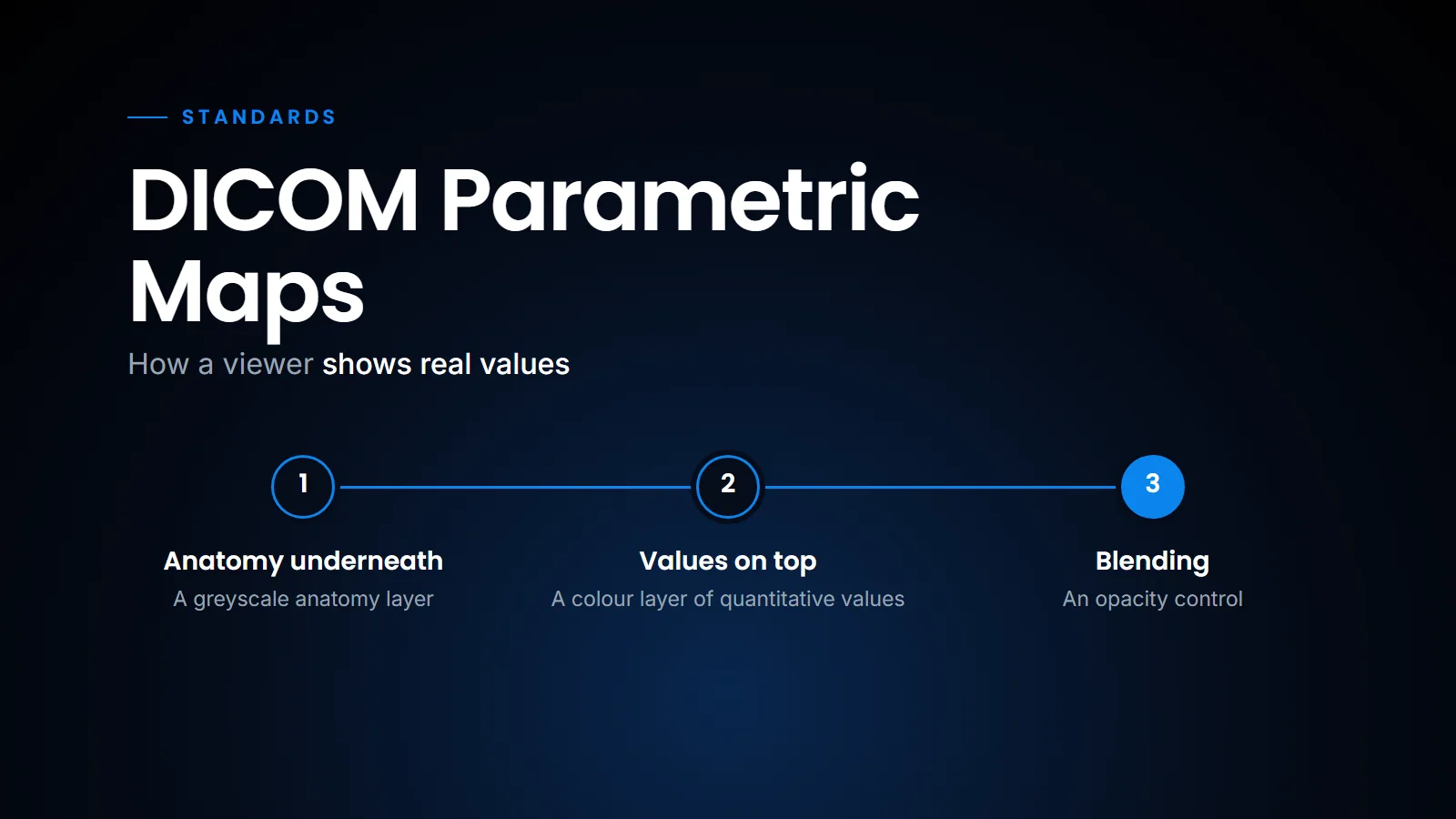
DICOM Parametric Maps
DICOM Parametric Maps store AI heat maps, ADC and perfusion as real values per voxel. Why they beat secondary capture and how a viewer should blend them.
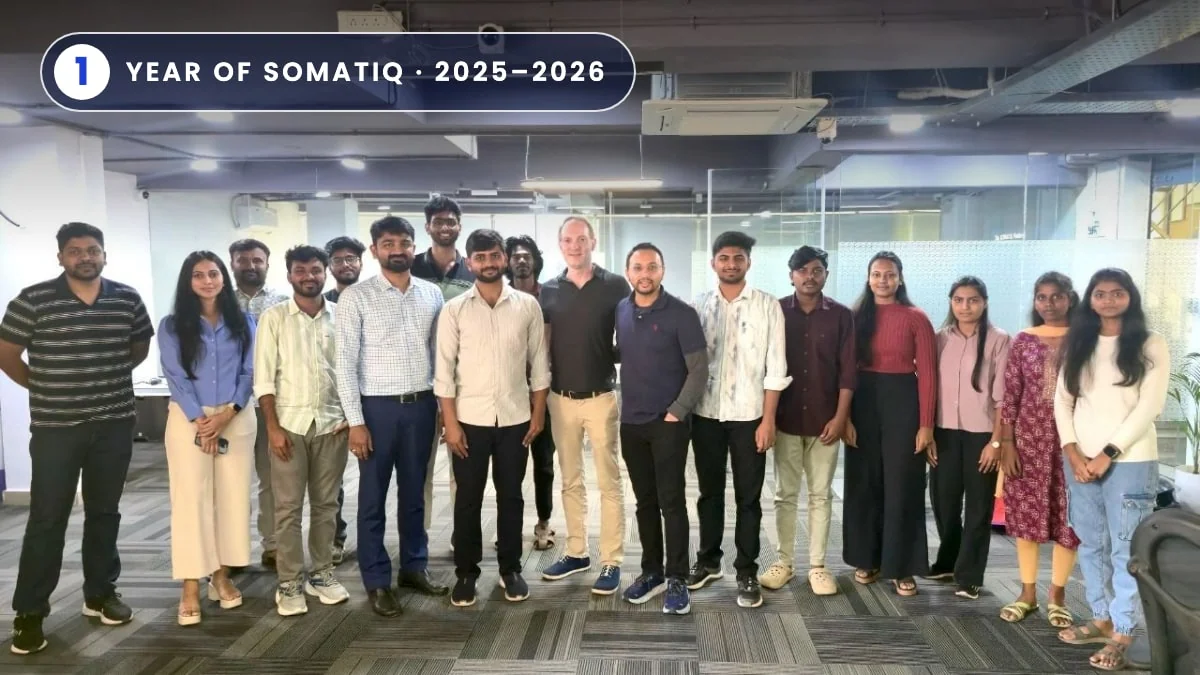
SOMATIQ at one year
SOMATIQ turns one: from a three-member team to 100+ imaging centres in 3 countries. The founders on the people who shaped the first year, and what comes next.
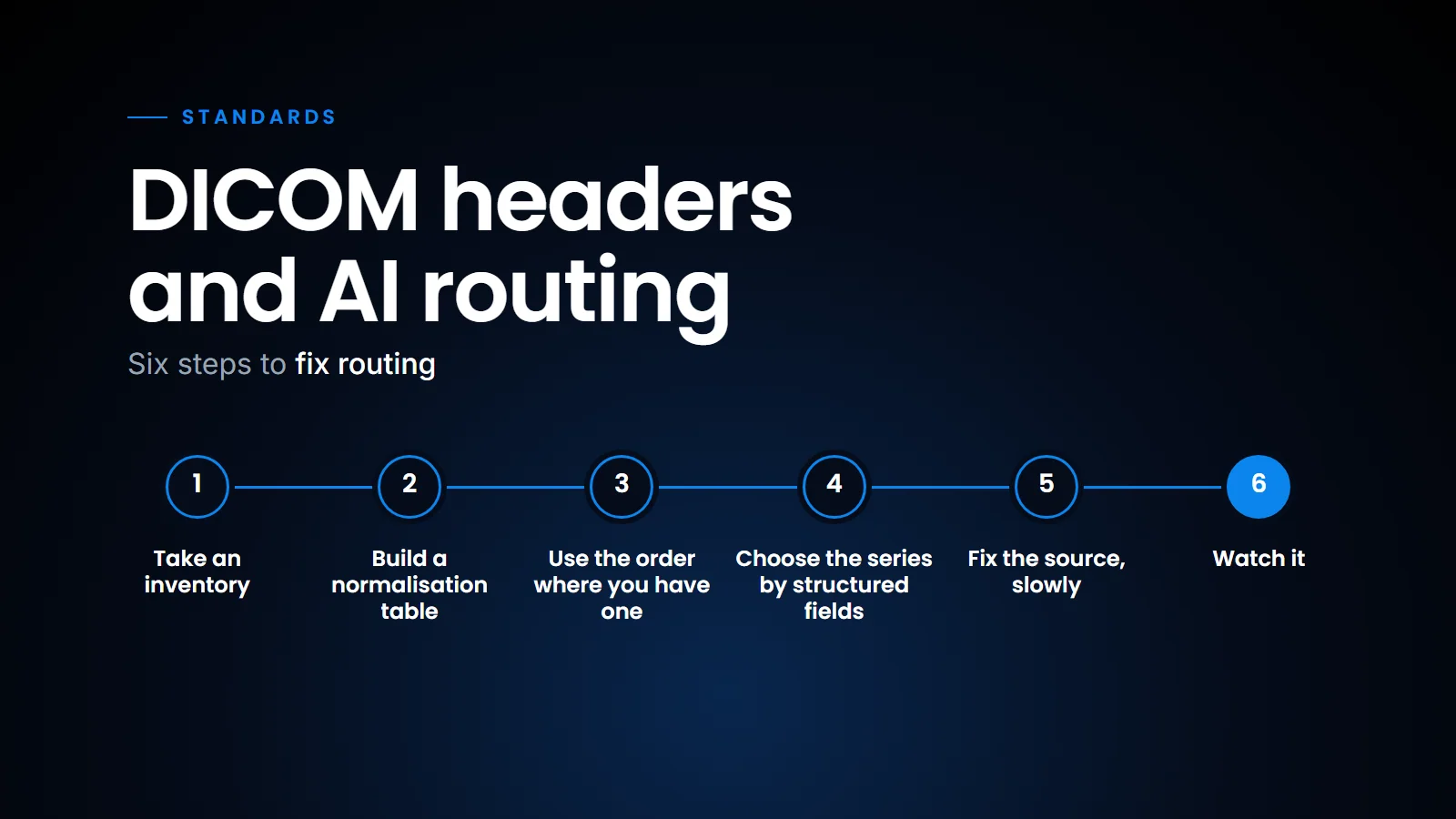
DICOM headers and AI routing
Why AI routing fails on inconsistent DICOM headers (series descriptions, body part, protocol names) and a practical way to normalise them in Indian centres.
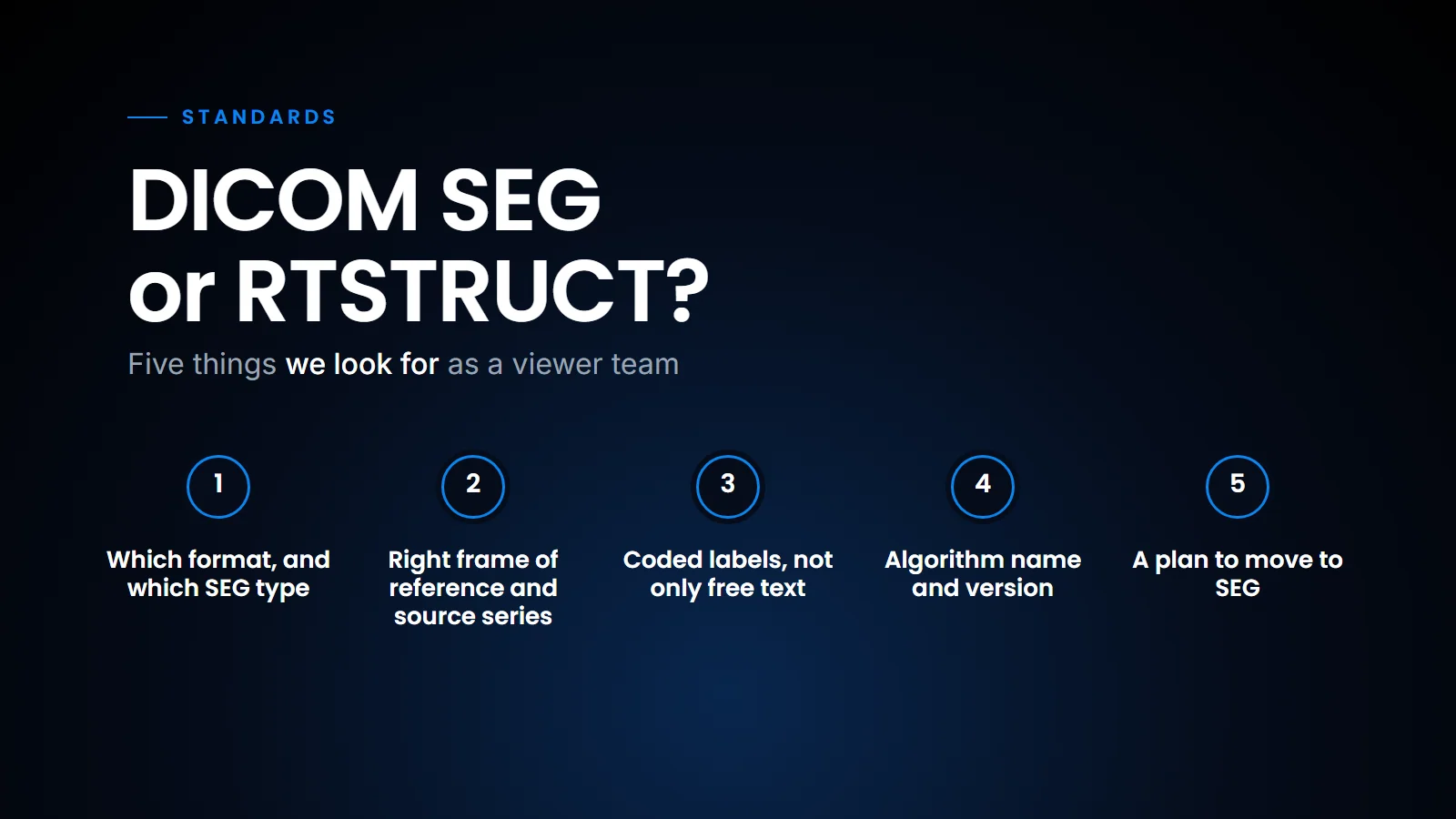
DICOM SEG or RTSTRUCT?
DICOM SEG vs RTSTRUCT for AI segmentations: how each encodes a region, precision, file size, viewer support, and which one we would pick for PET lesions.
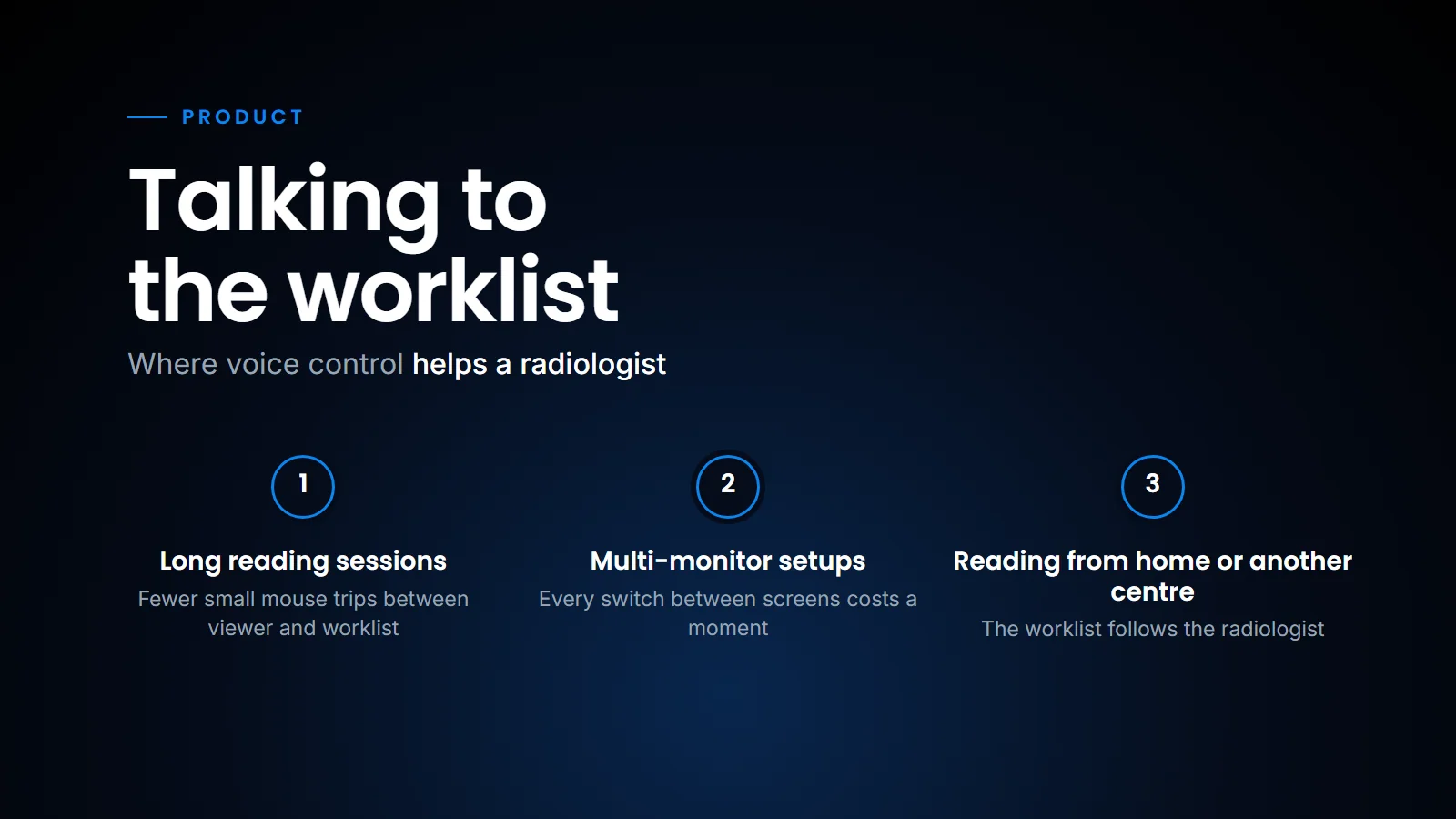
Talking to the worklist
Why SOMATIQ built voice control into its RIS-PACS so radiologists can talk to the worklist, move between cases hands-free and click less, and what to check.
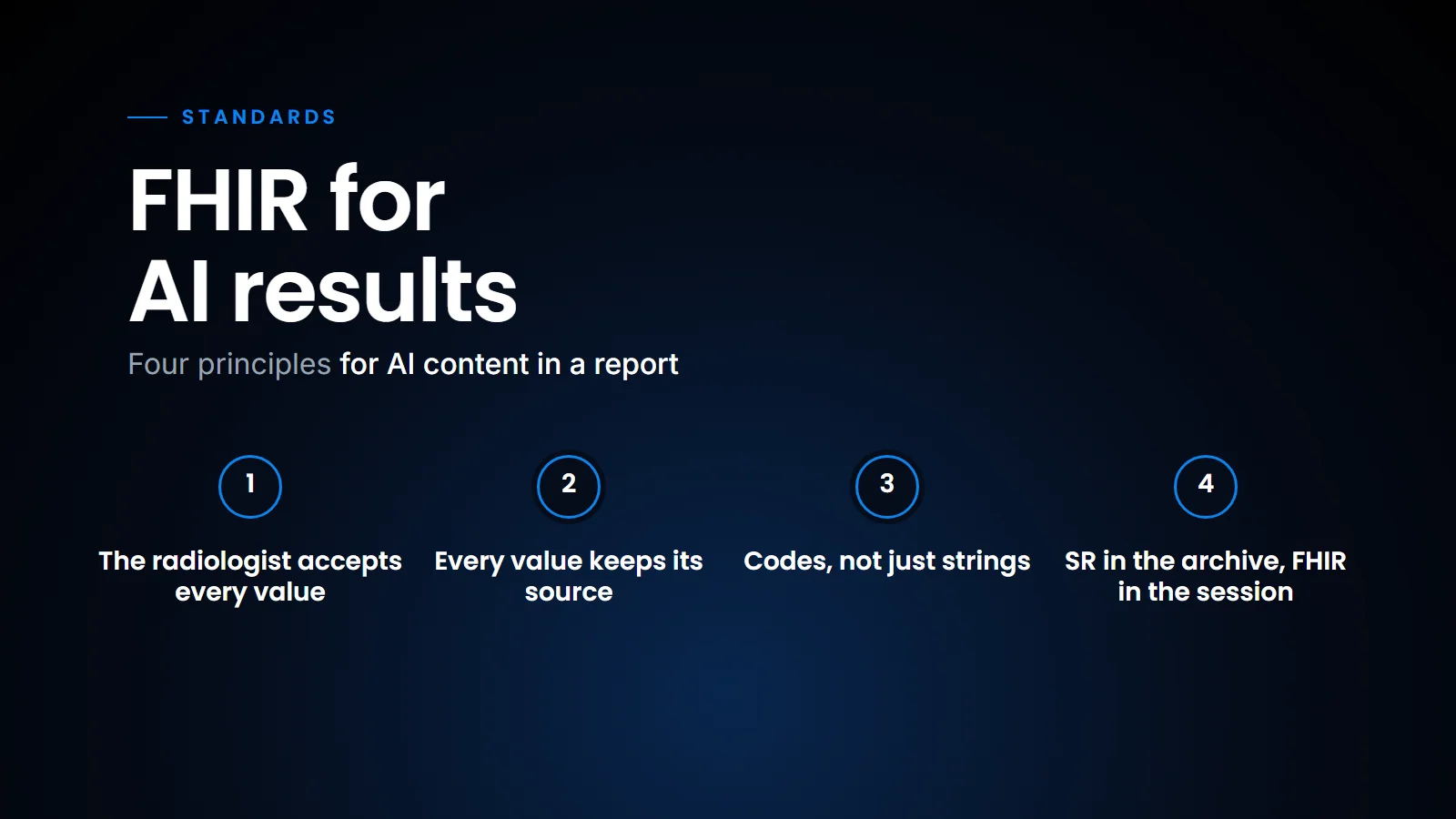
FHIR for AI results
How IHE IRA and FHIR carry AI results into the report: FHIRcast context, Observation, ImagingSelection, DiagnosticReport and why reporting prefers FHIR.
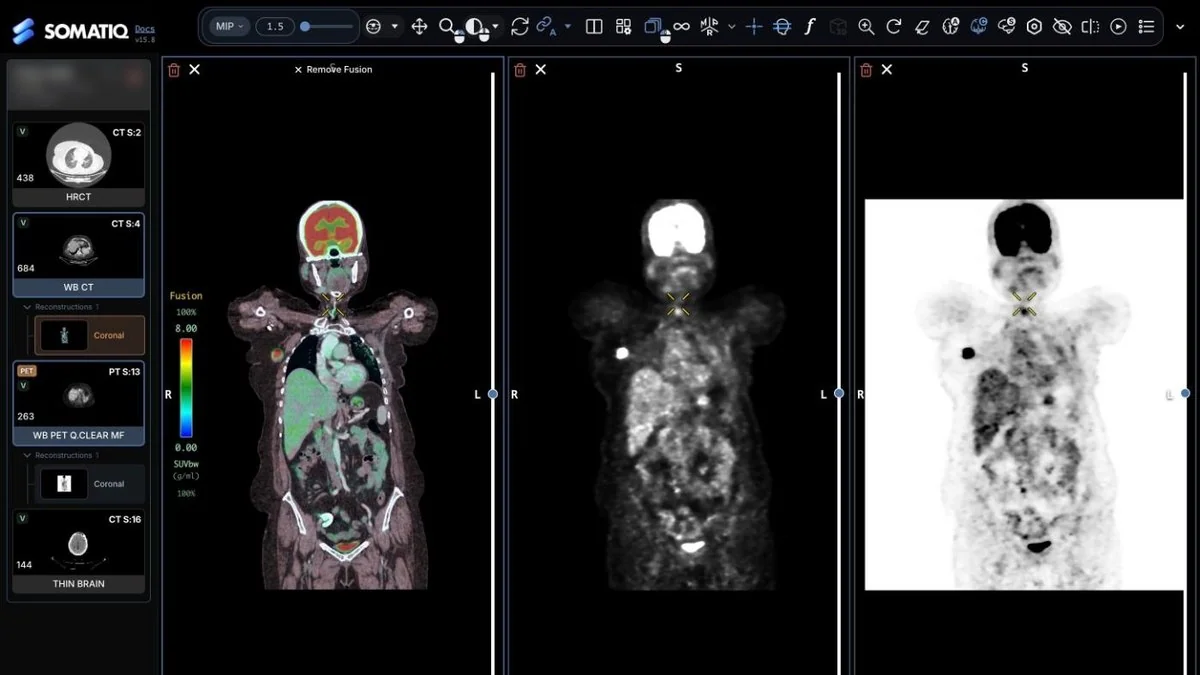
Reading PET/CT in the browser
What PET/CT reading needs from a viewer: fusion, correct SUV, and threshold-based lesion segmentation, explained plainly, and why doing it in the browser helps.
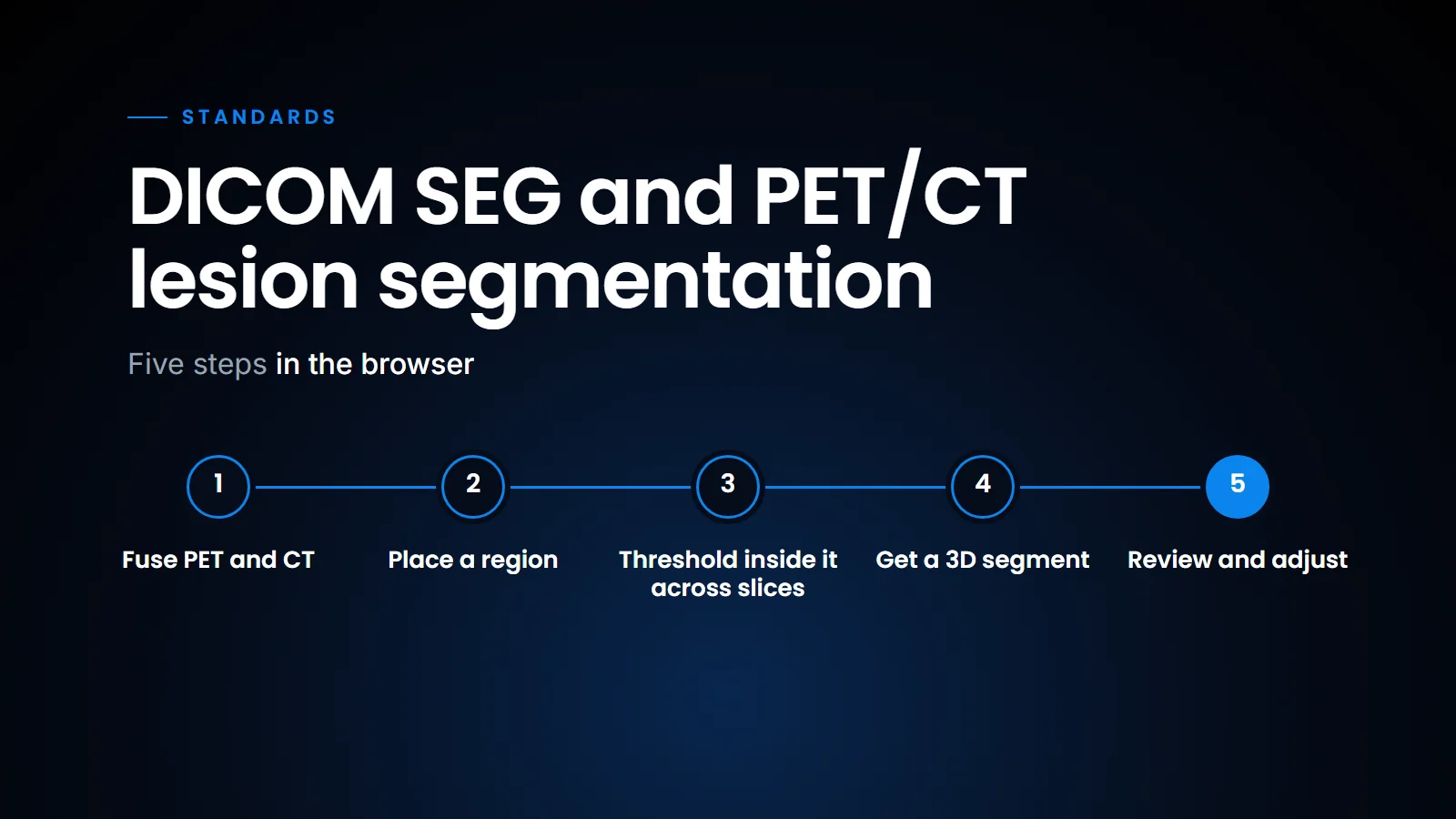
DICOM SEG and PET/CT lesion segmentation
How DICOM SEG stores segmentations, and how the SOMATIQ browser viewer segments PET/CT lesions in 3D using a threshold, with no workstation to install.
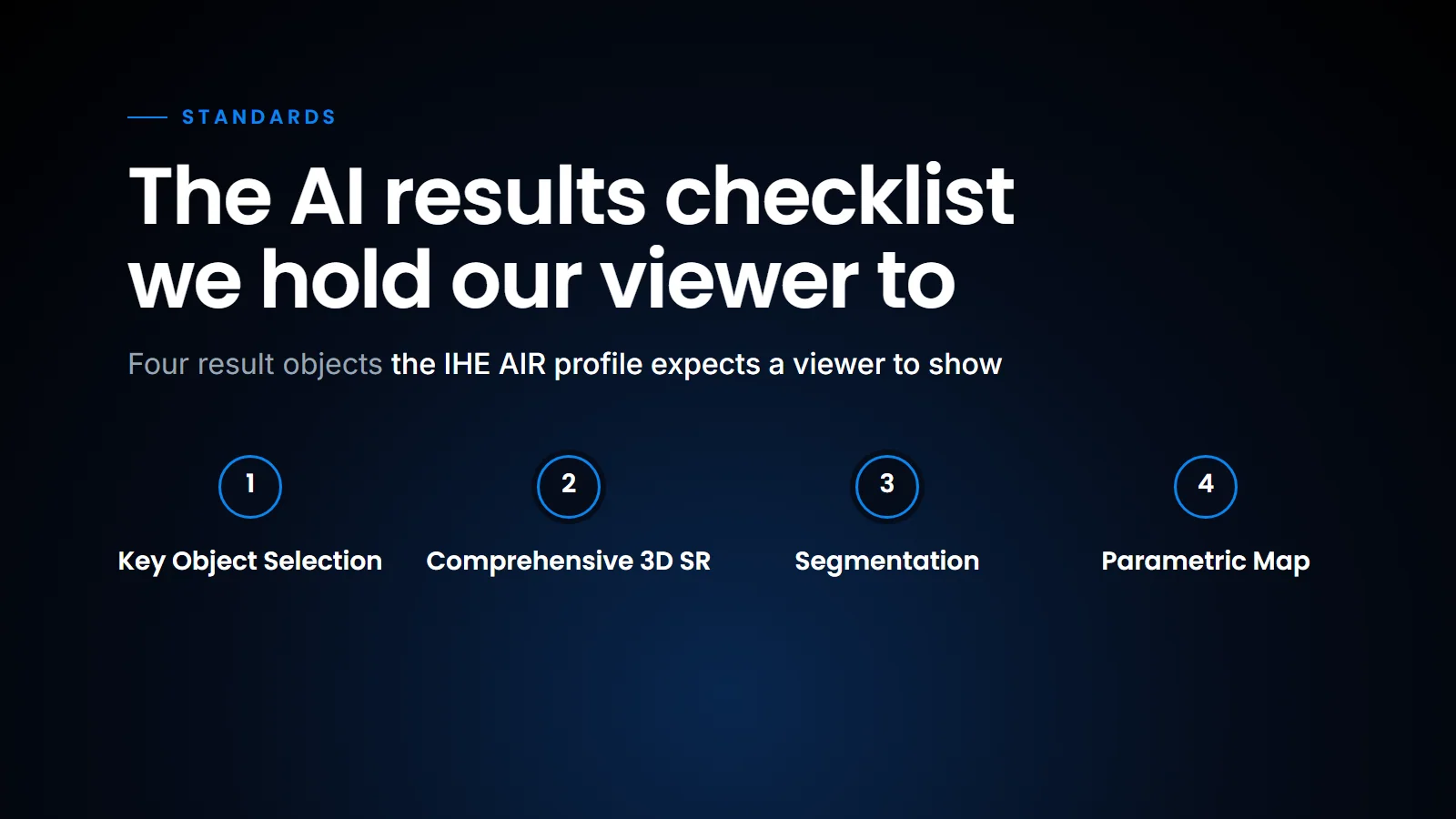
The AI results checklist we hold our viewer to
The IHE AI Results profile says how a PACS viewer should show AI output. Here is the checklist, item by item, and how the SOMATIQ viewer meets it.
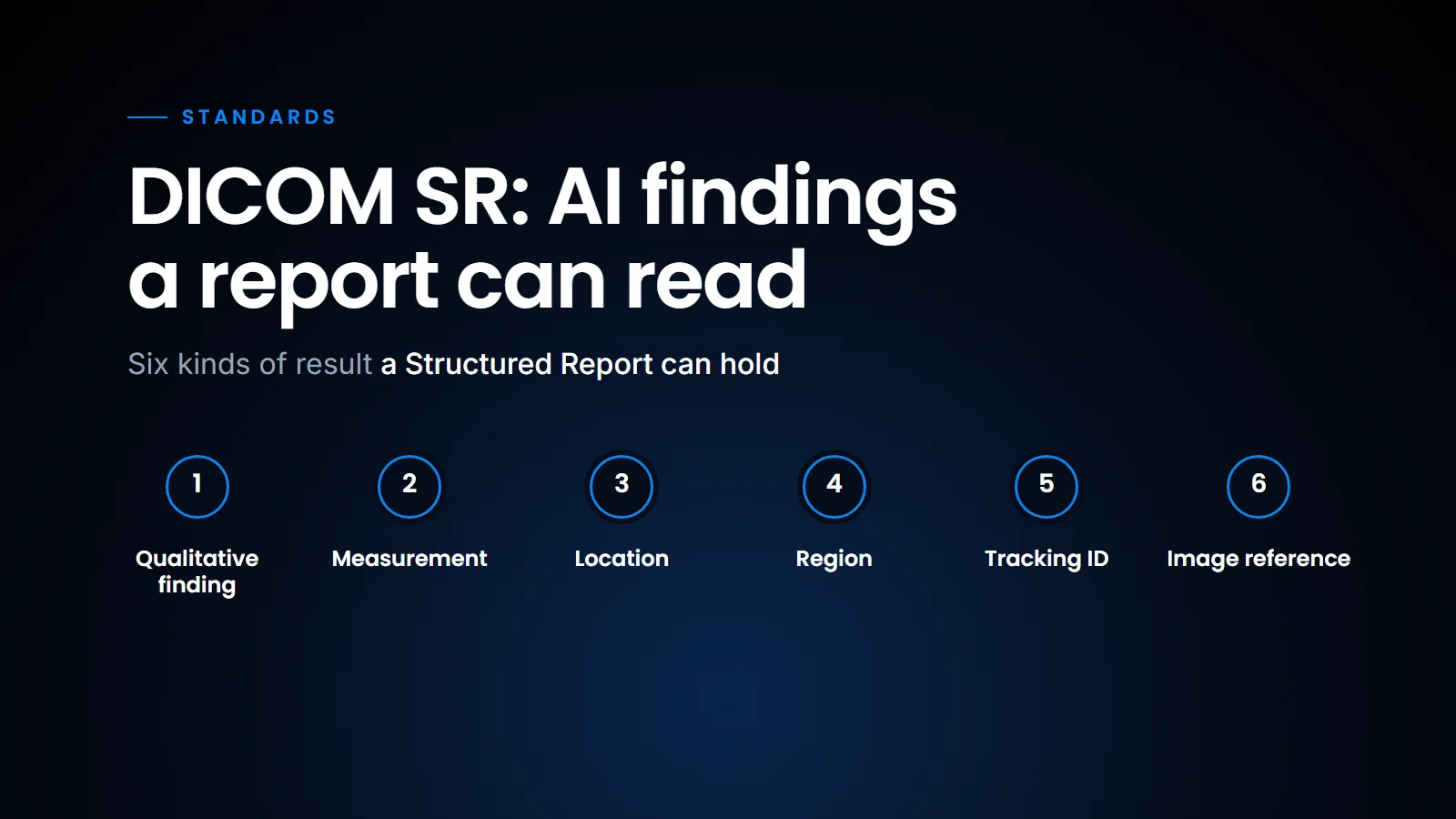
DICOM SR: AI findings a report can read
A DICOM Structured Report turns AI output into coded findings and measurements a reporting system can use. What TID 1500 is and how SOMATIQ uses it.
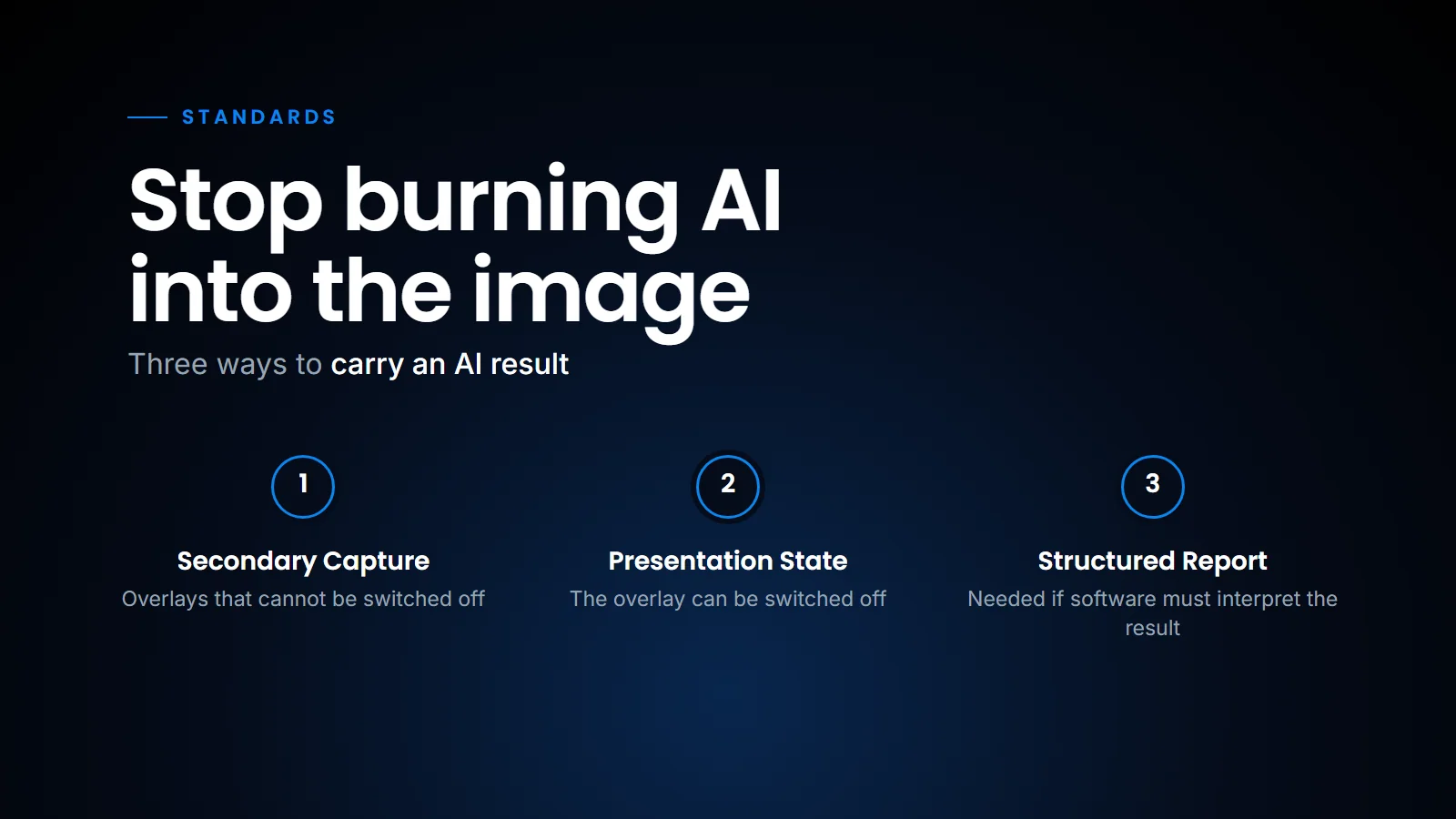
Stop burning AI into the image
Burned-in AI annotations add images and can't be switched off. DICOM Presentation States fix that. How they work, and how the SOMATIQ viewer uses them.
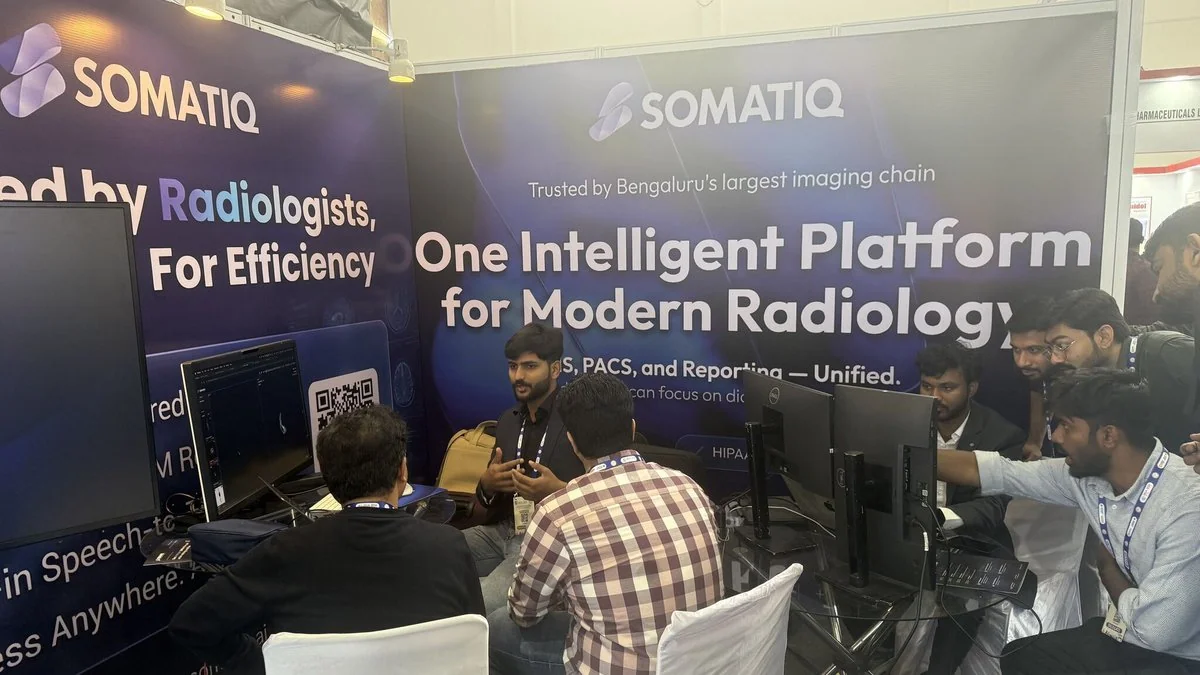
What radiologists told us at IRIA 2026
What radiologists told SOMATIQ at IRIA 2026 in Hyderabad: fewer clicks, smarter systems, 100+ reporting sign-ups and a worklist you can talk to.
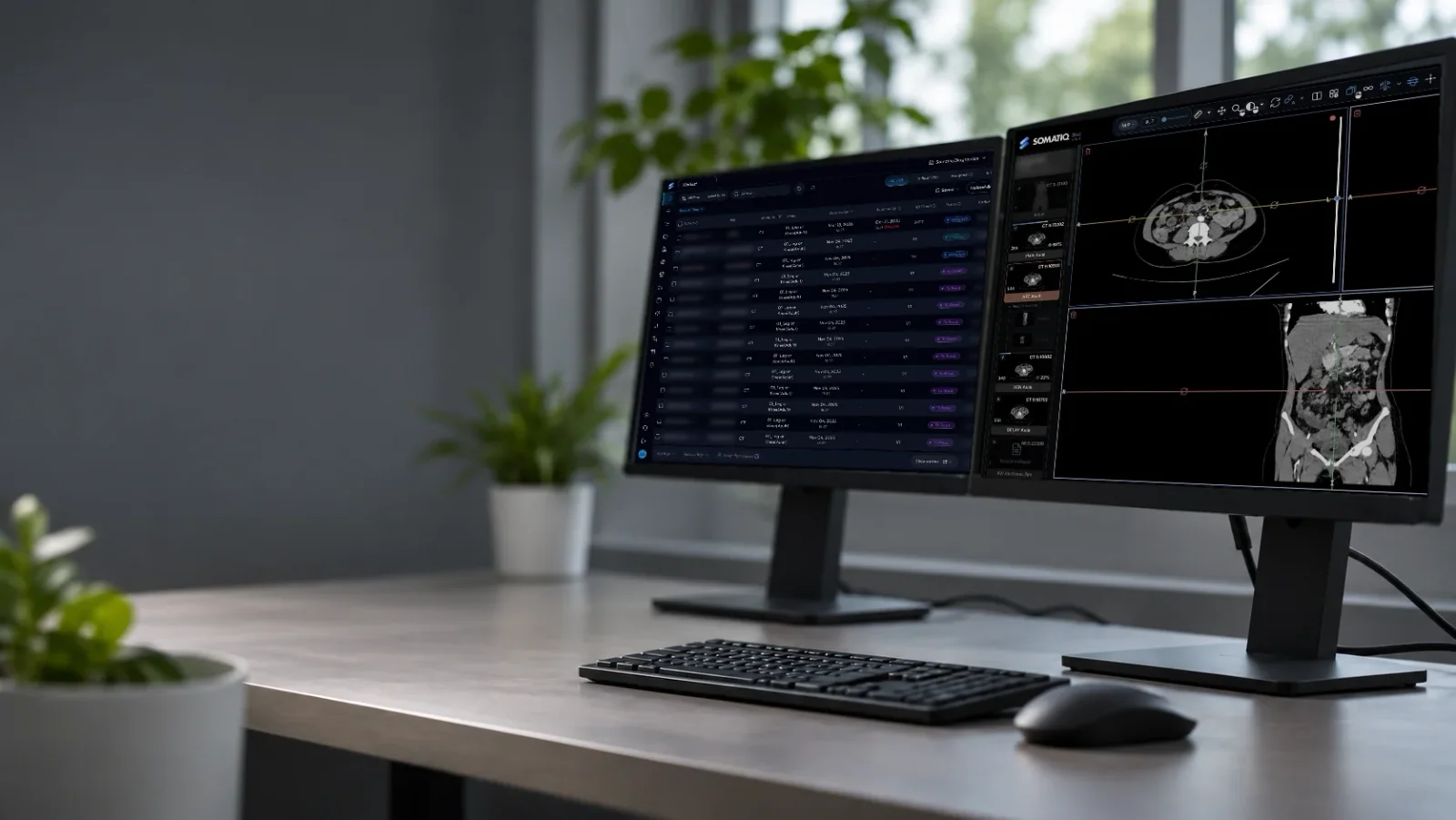
What "AI-native" RIS + PACS actually means
What an AI-native RIS + PACS platform is, how it differs from PACS with an AI plugin, and what "native" means on a normal reporting day in a centre.
Why we built SOMATIQ
Why Naveen K started SOMATIQ: growing up in rural Tamil Nadu, seeing what "access" means, and finding that radiology's real problem is the software underneath.

What RSNA 2025 taught me
Notes from Naveen K's first RSNA: the AI drawing crowds was the infrastructure helping radiologists scale, not software trying to replace them.