What radiologists told us at IRIA 2026
IRIA, the annual conference of the Indian Radiological and Imaging Association, is where a large part of Indian radiology turns up in one place: practising radiologists, residents, academic departments, hospital operators and vendors. For a company building radiology software, it is the closest thing to a week-long conversation with your users. For us, IRIA 2026 at HITEX, Hyderabad, was the first time we showed SOMATIQ in public, at stall D17, two weeks after we announced the launch. These are my notes from before and after, with some context added for readers who were not there.
Before: what we went to show
Just before the conference, I posted a short invitation:
The invitation
If you're at IRIA 2026, come visit us at Stall D17.
We're excited to showcase what we've been building - a voice-controlled RIS PACS, a collaborative viewer, and AI-native workflows designed to reduce friction and speed up reporting.
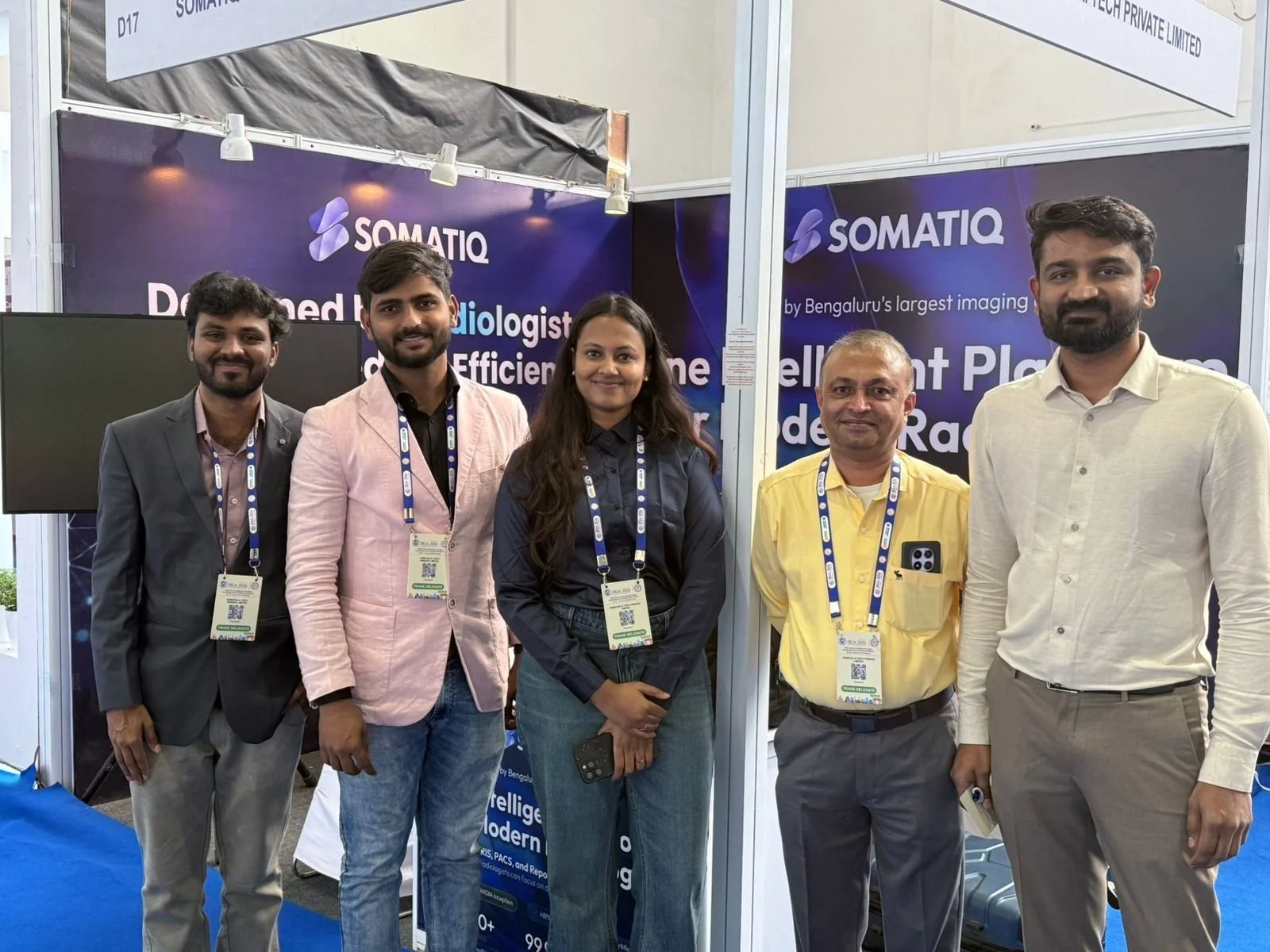
That was the plan. What we got back was more useful than any walkthrough we gave.
After: radiology needs fewer clicks and smarter systems
IRIA 2026 validated a simple truth: radiology needs fewer clicks and smarter systems.
Over four packed days, we spoke with radiologists, hospital operators, and international delegates who were refreshingly honest about their daily workflows, pain points, and expectations from technology. Those conversations mattered more than any demo.
Our reporting product crossed 100+ sign-ups
Our pure reporting product, RadOne (now the Trinity Reporting Engine), crossed 100+ sign-ups, reinforcing the need for fast, intuitive reporting without complex integrations.
IRIA 2026, HITEX, Hyderabad
For context, the Trinity Reporting Engine by SOMATIQ is the reporting piece of the platform on its own. A lot of radiologists do not control the PACS or RIS at the centres they report for; they might read for three or four places, each with its own setup. What they do control is how they write the report. Trinity is for that radiologist, who can start using it without waiting for anyone to integrate anything. The trade-off is plain: a standalone reporting tool cannot remove the friction that lives in someone else's RIS or PACS, but it can make the part of the day the radiologist owns faster.
The sign-ups at the stall told us we were not the only ones who saw that need.
A worklist you can talk to
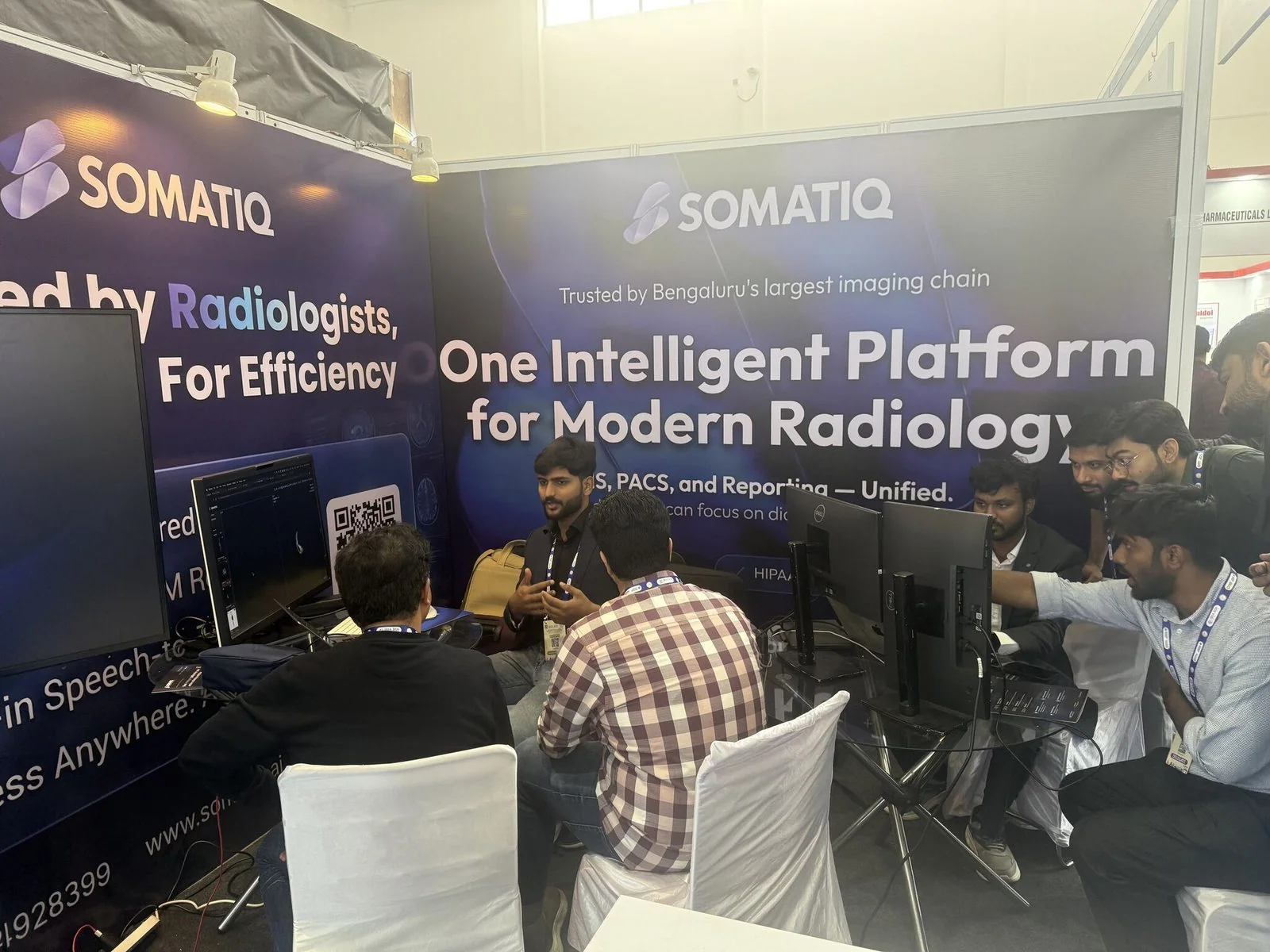
At the same time, our Agentic RIS + PACS approach - where radiologists can talk to their worklist, navigate cases hands-free, and reduce repetitive clicks - sparked strong interest and thoughtful debate around the future of radiology systems.
To make that concrete: in most systems, moving through a worklist means mouse, keyboard and a lot of small clicks. Open the next case, find the prior, change the layout, go back, filter by modality. Each one takes a second. Across a day of reporting, they add up to a lot of time spent operating software instead of looking at images. With a voice-controlled worklist, the radiologist can say what they want and keep their eyes and hands on the case.
The debate was as useful to us as the interest. A change to how radiologists move through their day should be argued over, and we want to hear the hard questions before we ship, not after. (At RSNA 2025 I had seen how much radiologists value tools that ask for the least change in behaviour; a voice worklist has to earn its place against that standard.)
The collaborative viewer and academic radiologists
Our collaborative viewer was especially well received by academic radiologists, who valued the ability to securely share their viewer and collaborate with peers anytime, anywhere.
Academic radiologists spend a lot of their time with other people around a case: residents, colleagues, a clinician who wants to see the finding for themselves. Sharing a screen on a video call or sending screenshots is how much of that happens today. Being able to share the actual viewer, securely, changes what that conversation can be, because the other person can scroll, window and measure on the same study instead of looking at a picture of it.
Talking to others building in this space
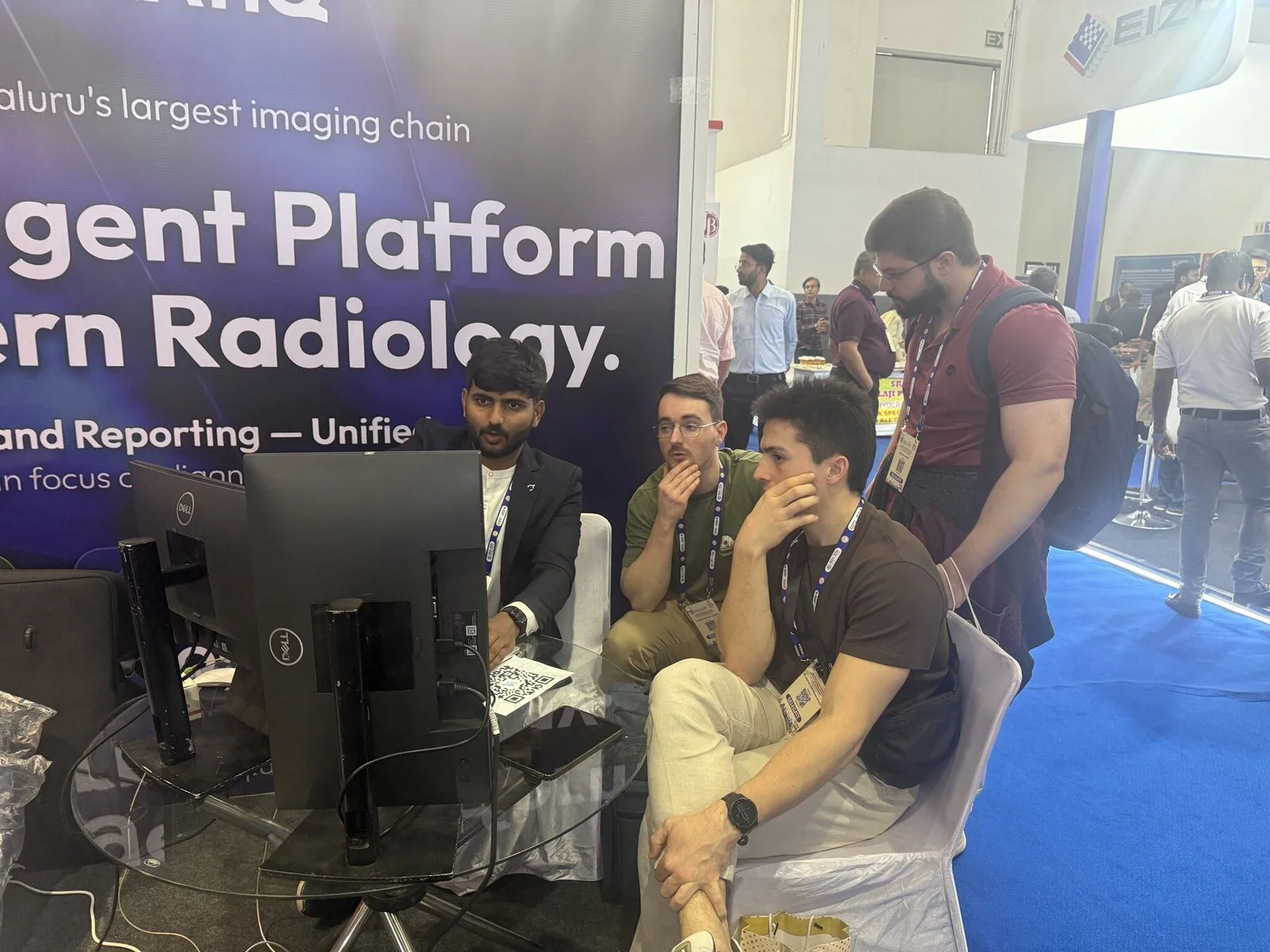
Equally valuable were the open discussions with others building in this space. Sharing perspectives on interoperability, AI adoption, and clinician trust was energising.
And a small but important note - IRIA 2026 took great care of everyone with excellent food throughout the day, which kept the energy high for conversations and learning.
Taking it back into the product
We're taking this feedback straight back into the product. The next few months will be focused on execution, iteration, and delivering real value to radiologists.
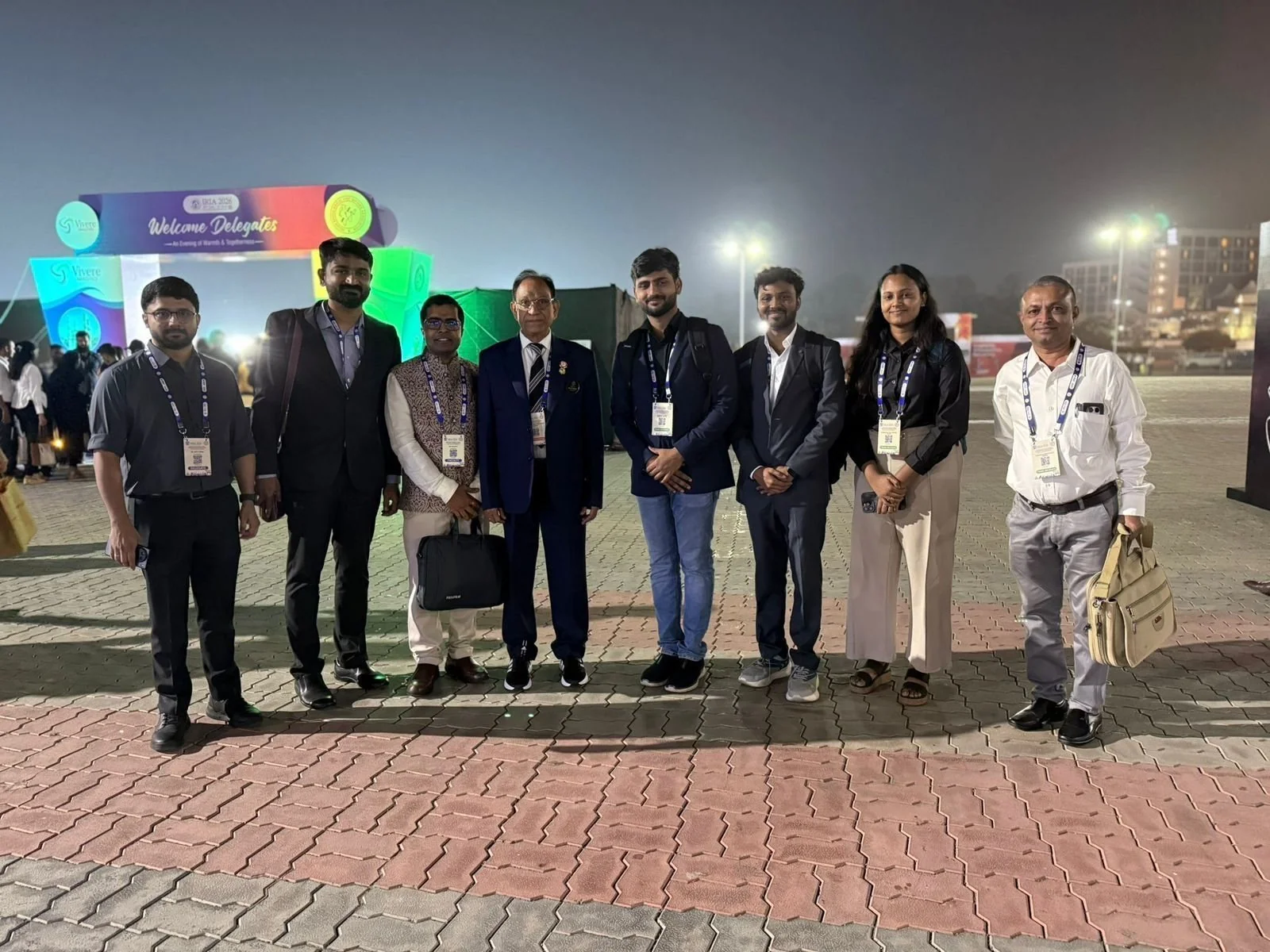
Grateful to IRIA, our users, partners, and the community that continues to push us forward.
What this means for a centre
If you run a centre, the message from IRIA was not really about any one feature. It was that radiologists notice clicks. They notice logins, slow priors, and having to switch between tools to finish one report. When you compare systems, it is worth asking your own radiologists to count the steps it takes to open a case, see the previous study and sign the report; that count tells you more than a feature list. Vishwanath made the same point from the reading-room side in Radiology did not fail AI: radiologists need better tools, not more interfaces.
If your radiologists only need a better way to report, the Trinity Reporting Engine is built for exactly that, without complex integrations. If you want the whole chain on one platform, from registration, scheduling and billing through acquisition, reporting and report delivery, that is what the SOMATIQ Unified RIS-PACS and TelePractice are for. You can read how the platform fits together in What "AI-native" RIS + PACS actually means.
Related reading
FAQ
Where was IRIA 2026 held?
At HITEX in Hyderabad. SOMATIQ was at stall D17, where we showed the platform publicly for the first time.
What is the Trinity Reporting Engine?
The Trinity Reporting Engine by SOMATIQ (formerly RadOne) is SOMATIQ's standalone reporting tool. Radiologists can use it for fast, intuitive reporting without complex integrations. It crossed 100+ sign-ups at IRIA 2026, under its earlier name.
What is a voice-controlled or agentic worklist?
It is a worklist radiologists can talk to. They can navigate cases hands-free and cut down on repetitive clicks, so more of their time goes into reading images.
What is a collaborative viewer?
It lets a radiologist securely share their viewer and work through a case with peers, from anywhere. Academic radiologists at IRIA 2026 responded especially well to it.
Ready to see your workflow on one platform?
We will walk you through the whole workflow, from registration to signed report.